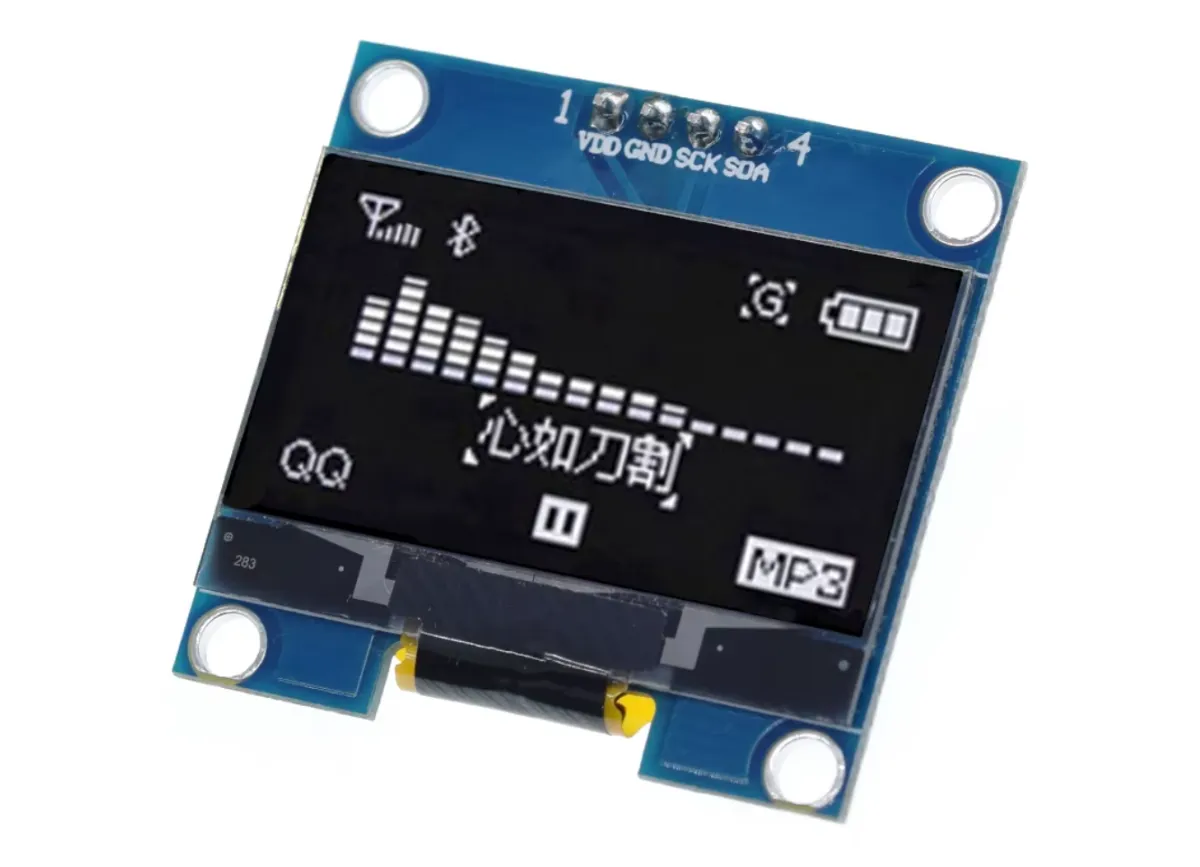
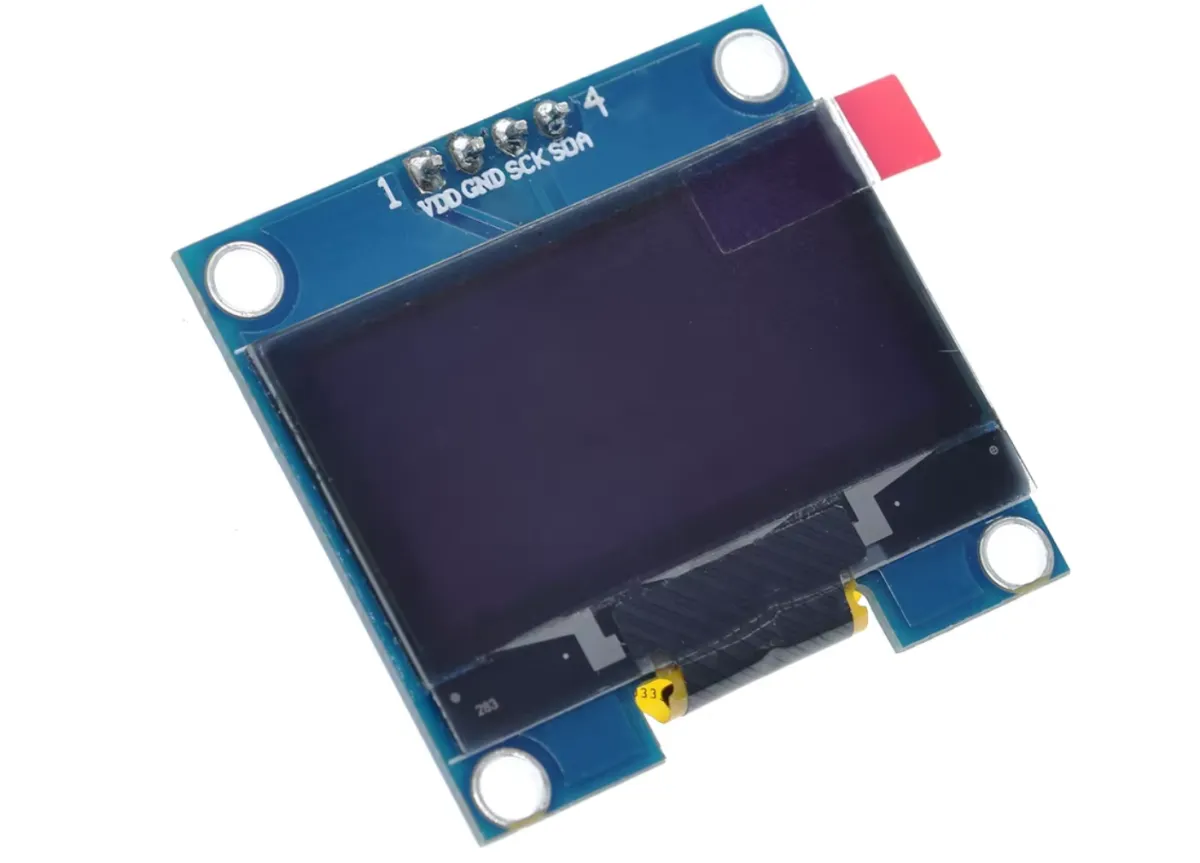
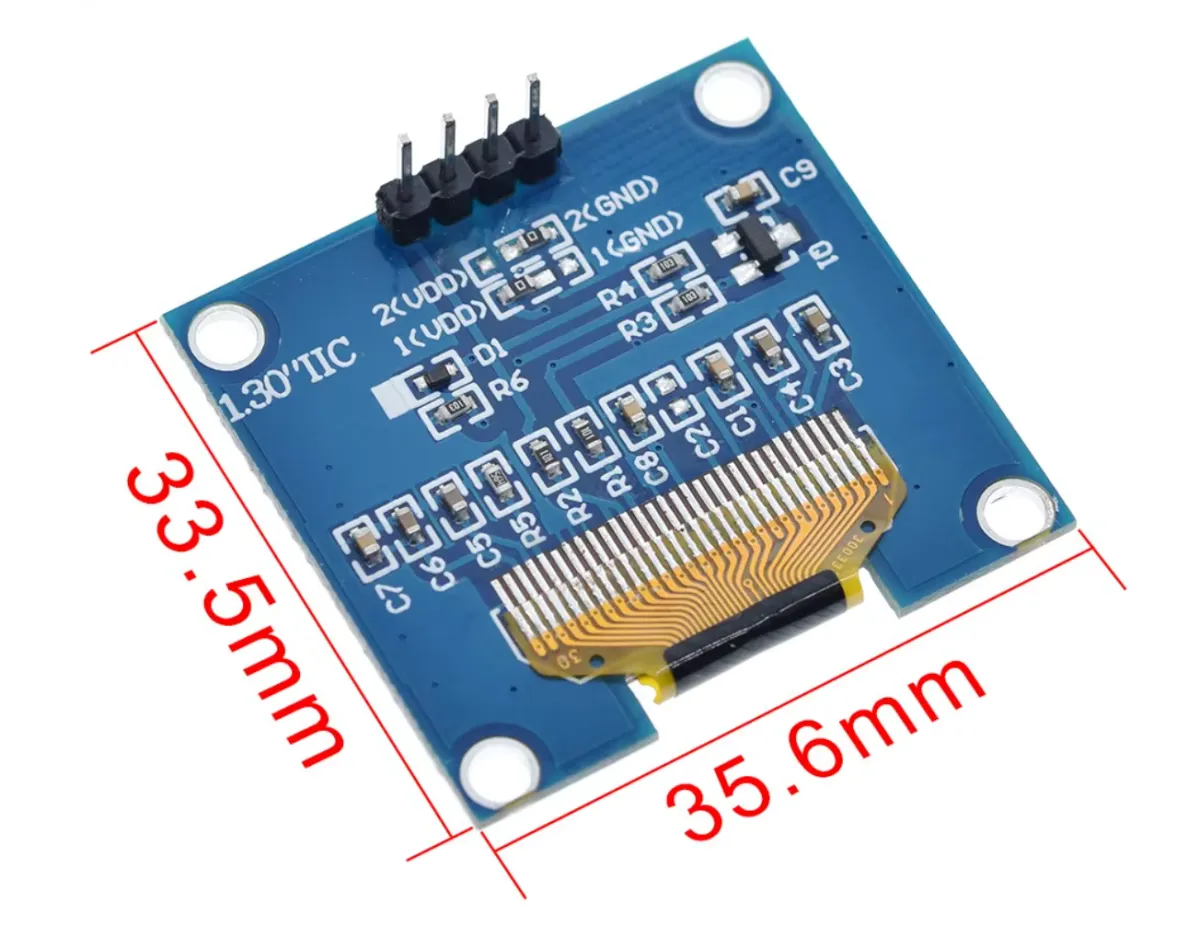
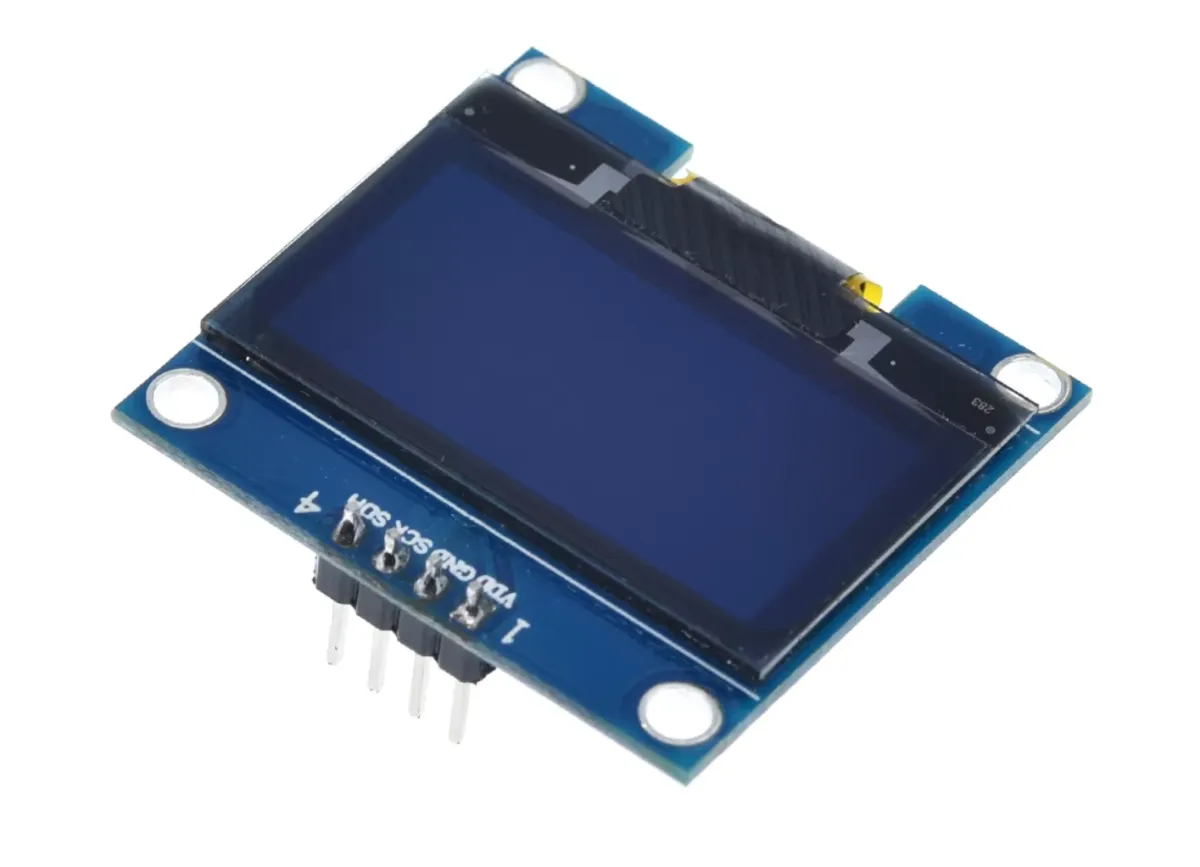
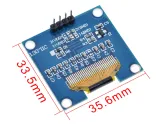
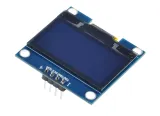
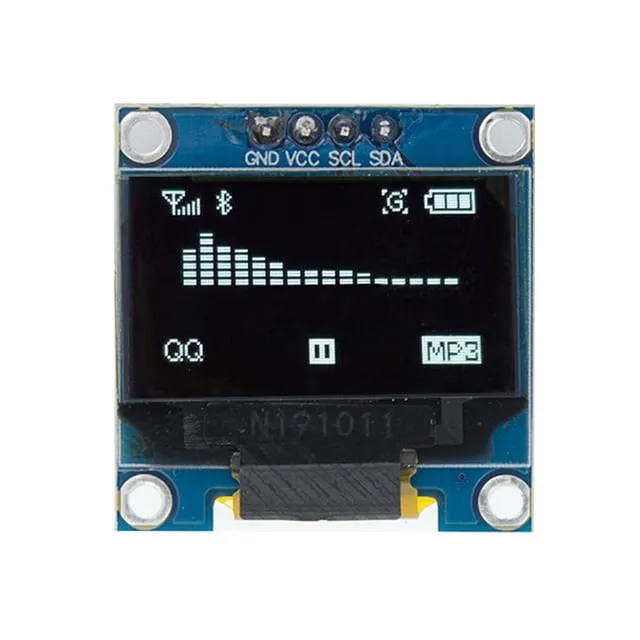
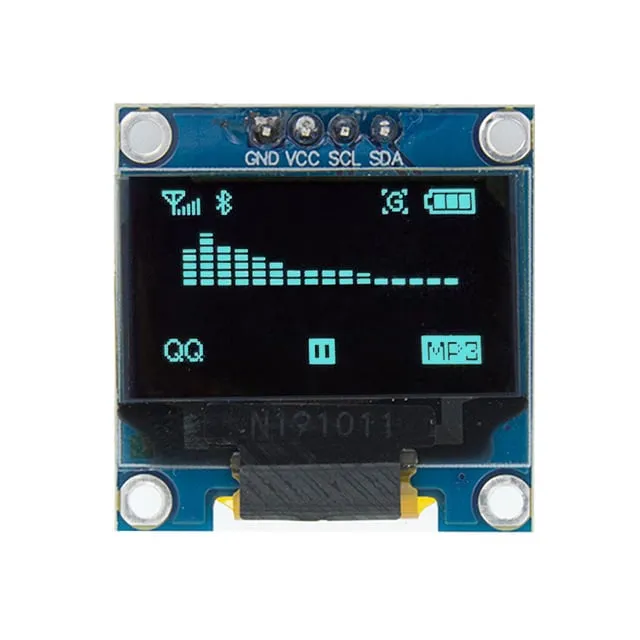
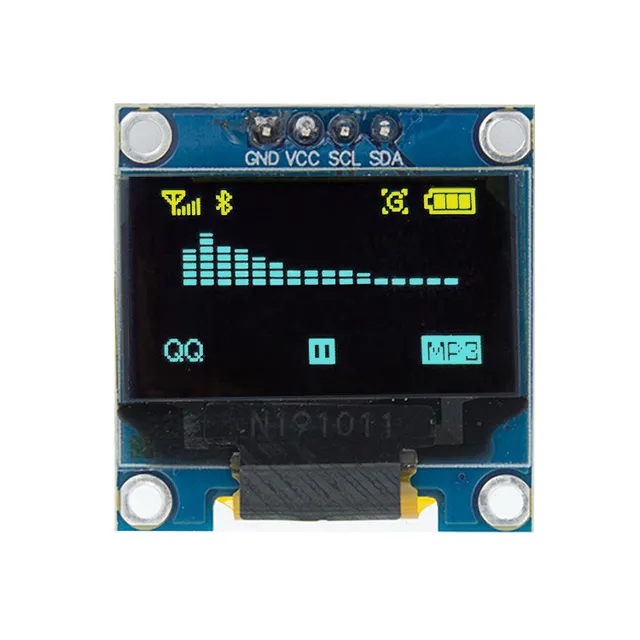
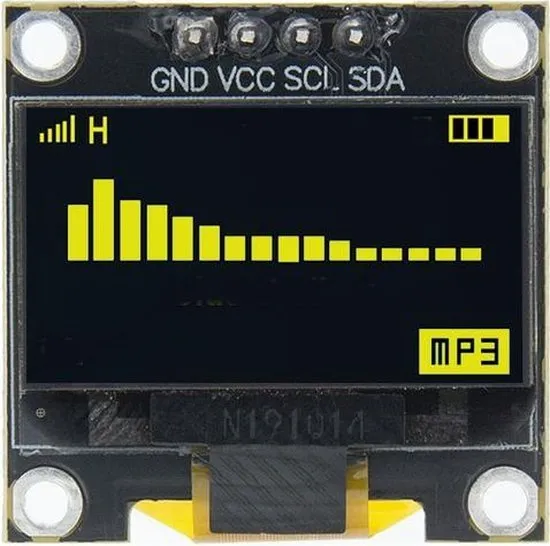
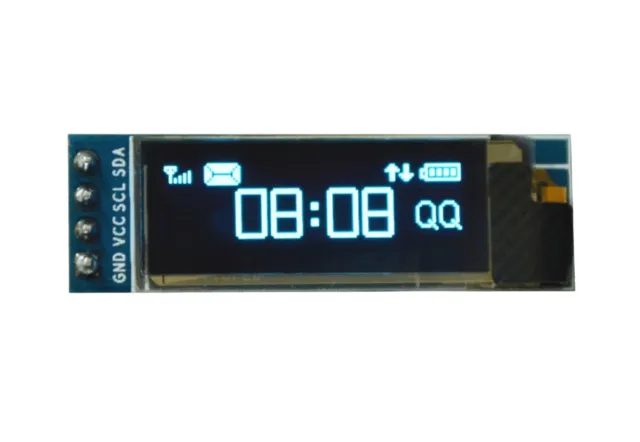
Compact OLED-display van 1,3 inch voor projecten met I2C-verbinding en goed leesbaar wit scherm.
SKU: OT8682 Número do artigo: AA420 EAN: 8721244302898 Localização: B06.07
Alternativa
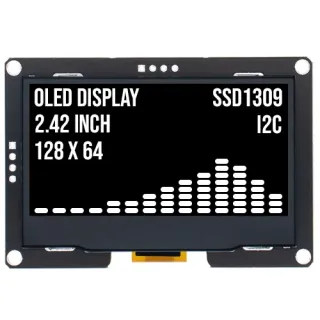
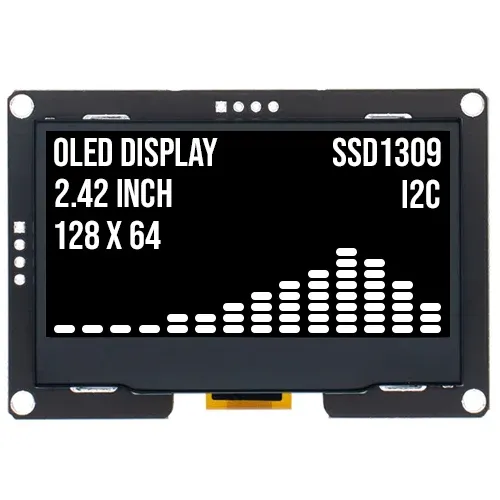
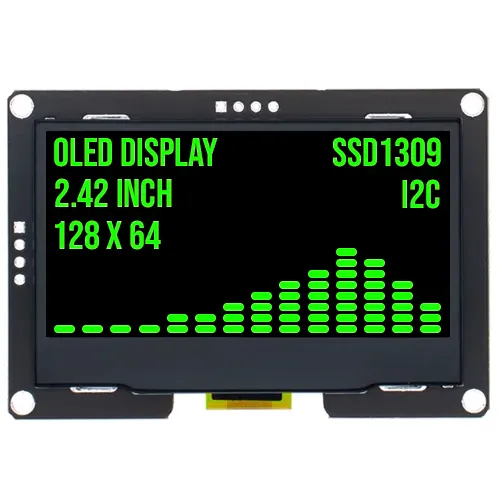
Ecrã OLED 2.4 polegadas 128x64 Branco I2C SSD1309 3.3V
€ 17,70
Ver esta alternativa
Como ligar o Mini display OLED branco 1.3 inch 128x64 I2C a um Arduino UNO ou ESP32, com um sketch de exemplo que podes carregar já.
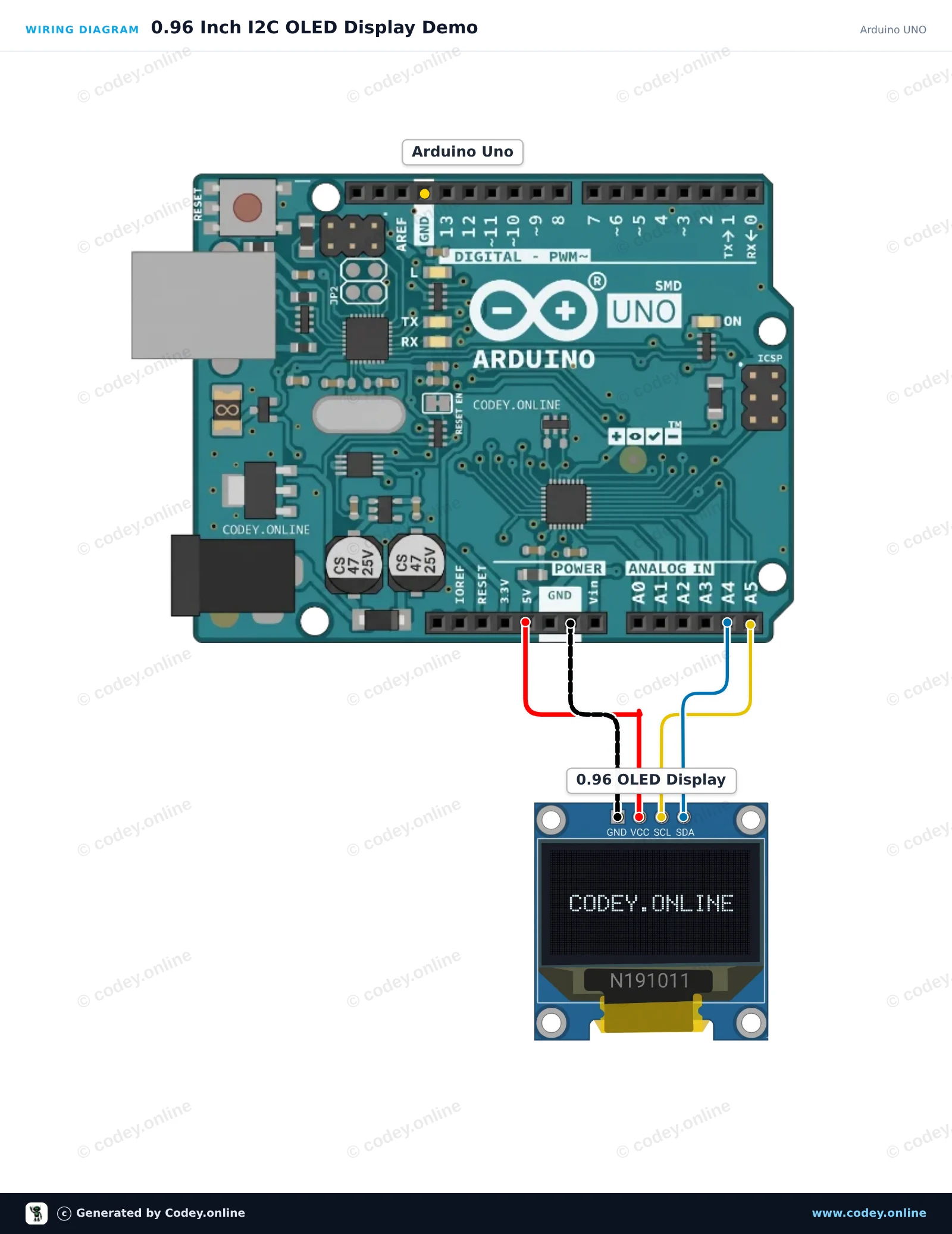
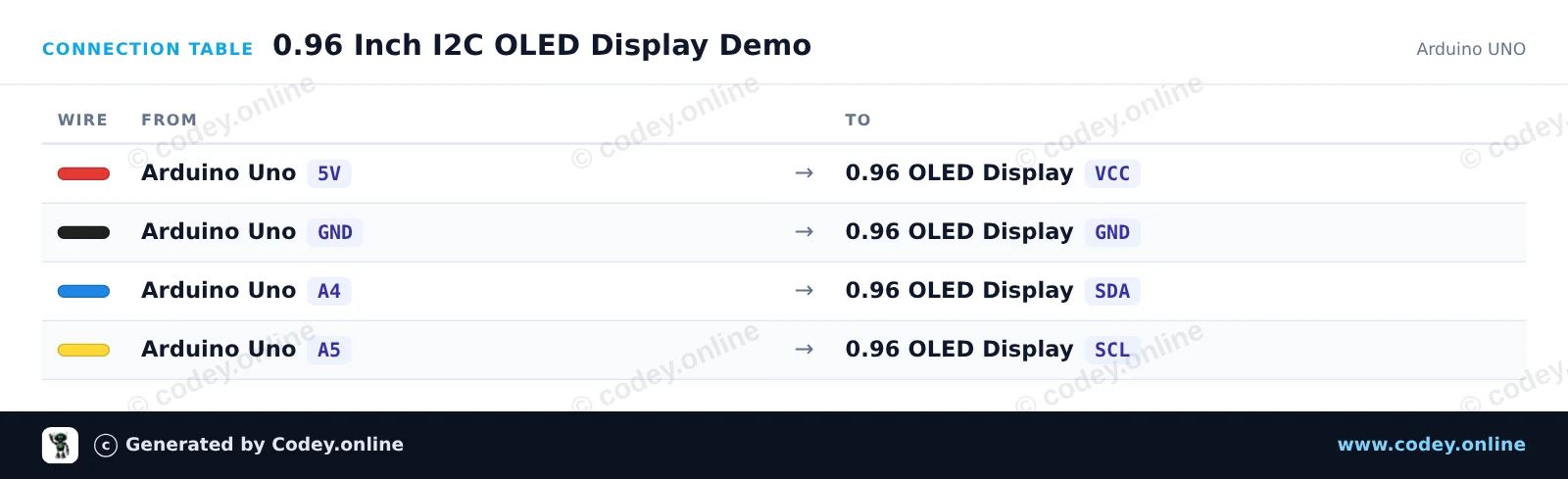
This project demonstrates how to connect and display text, graphics, and a counter on a 0.96-inch I2C OLED display with an Arduino Uno. The sketch uses the lightweight U8g2 library to render a title, separator line, and incrementing counter.
/*
* ==================================================================
* Generated by Codey.online — https://www.codey.online
* ==================================================================
* Project : 0.96 Inch I2C OLED Display Demo
* Board : Arduino UNO (arduino:avr:uno)
* Parts : OLED Display 0.96 inch
* Libraries : U8g2 2.36.19
*
* Codey Online is an AI-powered browser IDE for Arduino and ESP32.
* Describe your project and Codey writes the code, draws the wiring
* diagram and uploads it to your board, straight from the browser.
* This code is free to use, modify and share, without warranty.
* ==================================================================
*/
#include <Wire.h>
#include <U8g2lib.h>
// Initialize U8g2 for 128x64 SSD1306 OLED using hardware I2C
U8G2_SSD1306_128X64_NONAME_1_HW_I2C u8g2(U8G2_R0, /* reset=*/ U8X8_PIN_NONE);
int counter = 0;
void setup() {
Serial.begin(115200);
u8g2.begin();
Serial.println(F("OLED display initialized."));
}
void loop() {
u8g2.firstPage();
do {
// Header
u8g2.setFont(u8g2_font_ncenB08_tr);
u8g2.drawStr(0, 12, "Arduino Uno + OLED");
// Dividing line
u8g2.drawLine(0, 16, 127, 16);
// Counter value
u8g2.setFont(u8g2_font_ncenB12_tr);
u8g2.setCursor(0, 40);
u8g2.print(F("Count: "));
u8g2.print(counter);
// Footer / status
u8g2.setFont(u8g2_font_6x10_tr);
u8g2.drawStr(0, 58, "Status: Running");
} while (u8g2.nextPage());
counter++;
delay(1000);
}
Bibliotecas necessárias: U8g2 2.36.19
Wiring diagram and example code generated by Codey.online — https://www.codey.online
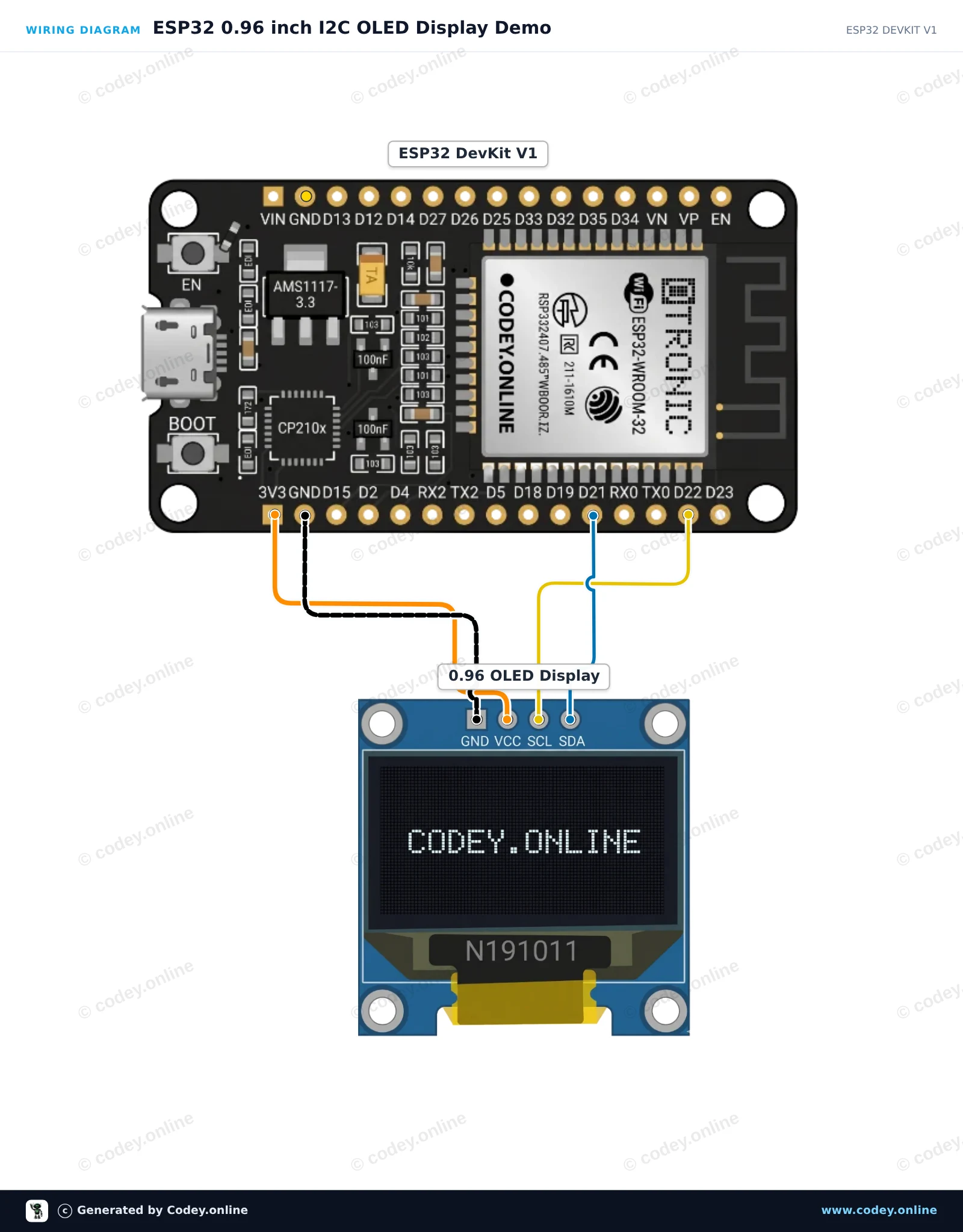
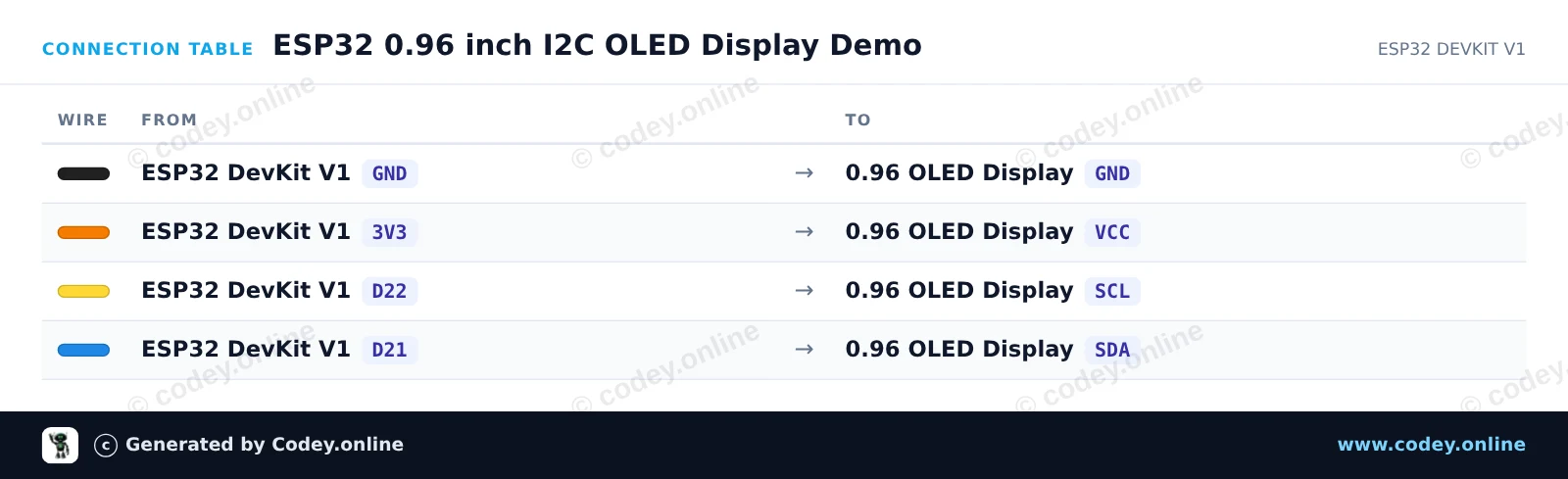
This project demonstrates how to connect a 0.96-inch I2C OLED display to an ESP32. The display initializes using default I2C pins (GPIO 21 for SDA, GPIO 22 for SCL) and shows a greeting text along with an updating live counter.
/*
* ==================================================================
* Generated by Codey.online — https://www.codey.online
* ==================================================================
* Project : ESP32 0.96 inch I2C OLED Display Demo
* Board : ESP32 DEVKIT V1 (esp32:esp32:esp32doit-devkit-v1)
* Parts : OLED Display 0.96 inch
* Libraries : Adafruit SSD1306 2.5.16, Adafruit GFX Library 1.12.6
*
* Codey Online is an AI-powered browser IDE for Arduino and ESP32.
* Describe your project and Codey writes the code, draws the wiring
* diagram and uploads it to your board, straight from the browser.
* This code is free to use, modify and share, without warranty.
* ==================================================================
*/
#include <Wire.h>
#include <Adafruit_GFX.h>
#include <Adafruit_SSD1306.h>
#define SCREEN_WIDTH 128
#define SCREEN_HEIGHT 64
#define OLED_RESET -1
#define SCREEN_ADDRESS 0x3C
Adafruit_SSD1306 display(SCREEN_WIDTH, SCREEN_HEIGHT, &Wire, OLED_RESET);
int counter = 0;
void setup() {
Serial.begin(115200);
// Default ESP32 I2C pins: SDA = GPIO 21, SCL = GPIO 22
Wire.begin(21, 22);
if (!display.begin(SSD1306_SWITCHCAPVCC, SCREEN_ADDRESS)) {
Serial.println(F("SSD1306 allocation failed"));
while (true);
}
display.clearDisplay();
display.setTextColor(SSD1306_WHITE);
display.setTextSize(1);
display.setCursor(0, 0);
display.println(F("ESP32 OLED Demo"));
display.display();
delay(1500);
}
void loop() {
display.clearDisplay();
display.setTextSize(1);
display.setCursor(0, 0);
display.println(F("ESP32 + SSD1306"));
display.drawLine(0, 12, display.width(), 12, SSD1306_WHITE);
display.setCursor(0, 20);
display.print(F("Counter: "));
display.setTextSize(2);
display.setCursor(0, 36);
display.print(counter);
display.display();
counter++;
delay(1000);
}
Bibliotecas necessárias: Adafruit SSD1306 2.5.16, Adafruit GFX Library 1.12.6
Wiring diagram and example code generated by Codey.online — https://www.codey.online
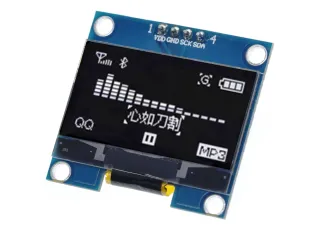
Este display OLED compacto tem uma diagonal de 1.3 inch e uma resolução de 128x64 pixels. Graças à apresentação branca, o ecrã é bem legível em diferentes condições de iluminação.
O display é ideal para projetos que necessitam de um ecrã claro e nítido com uma ligação I2C simples. A ampla faixa de tensão de alimentação e o funcionamento robusto em temperatura tornam-no adequado para diversas aplicações.

| Cor | branco |
|---|---|
| Conexão | interface I2C |
| Resolução | 128 x 64 pixels |
| Chip driver | SH1106 (compatível com SSD1306) |
| Tamanho do ecrã | 1.3 polegada |
| Tensão de alimentação | DC 3V a 5V |
| Temperatura de funcionamento | -30 a 70 °C |
| Compatível com | SSD1306 |
ok...................
Não ficas satisfeito? Tens 30 dias após a receção para devolver o produto.
Tudo sobre devoluções
Mini display OLED branco 1.3 inch 128x64 I2C