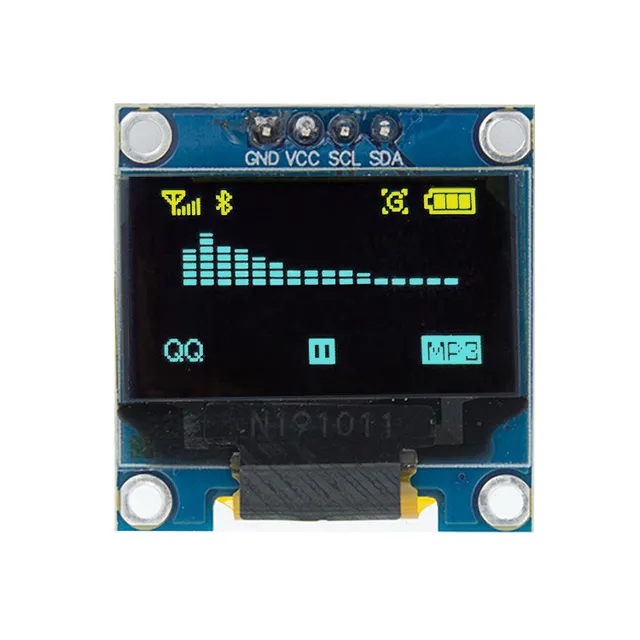
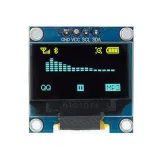
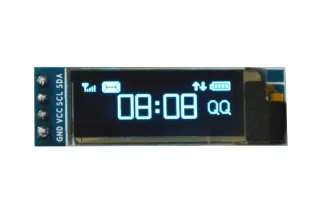
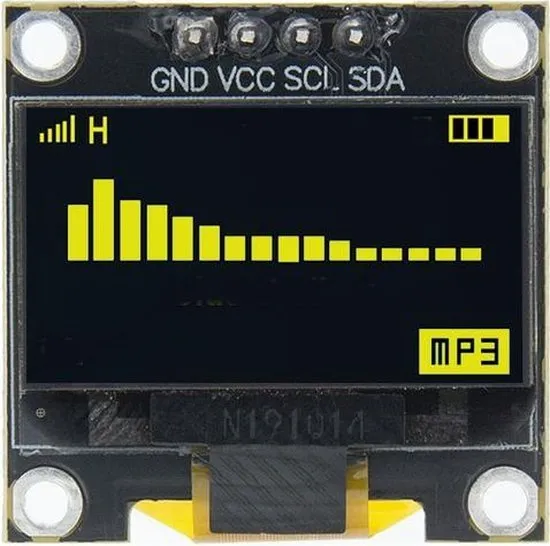
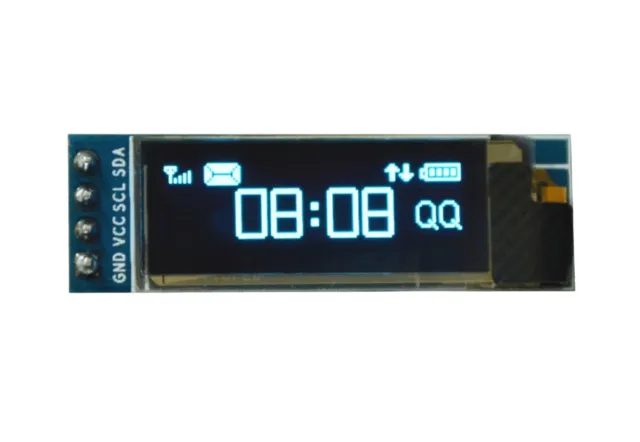
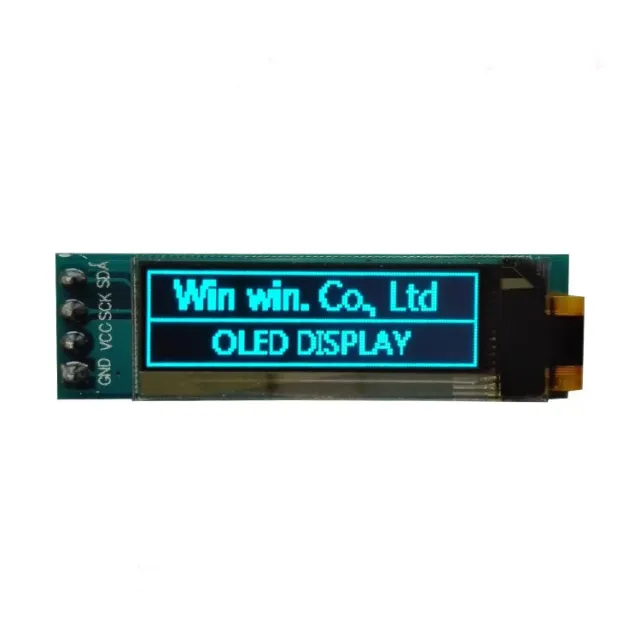
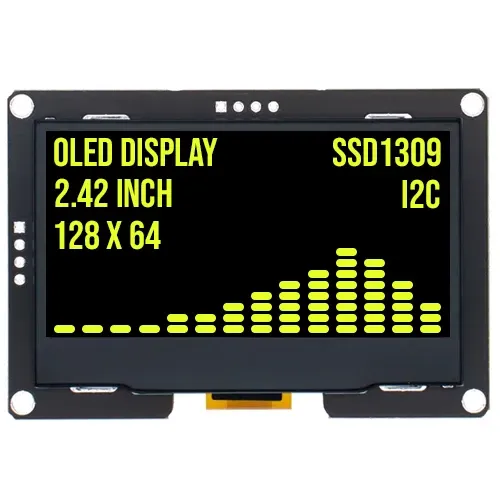
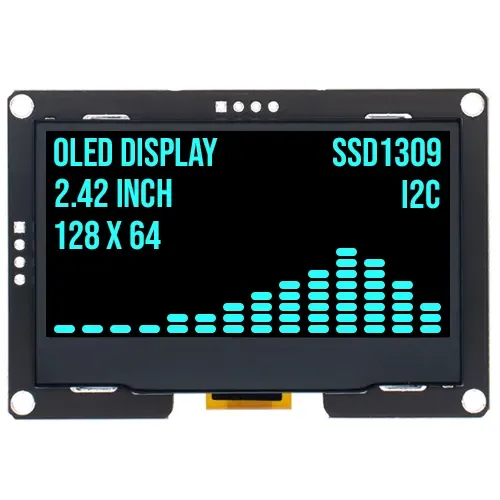
Compact 0,96 inch OLED schermpje met geel/blauwe weergave voor Arduino- en ESP32-projecten.
SKU: OT824-C65 Número do artigo: XH143 EAN: 7420129383786 Localização: C06.05
Alternativa
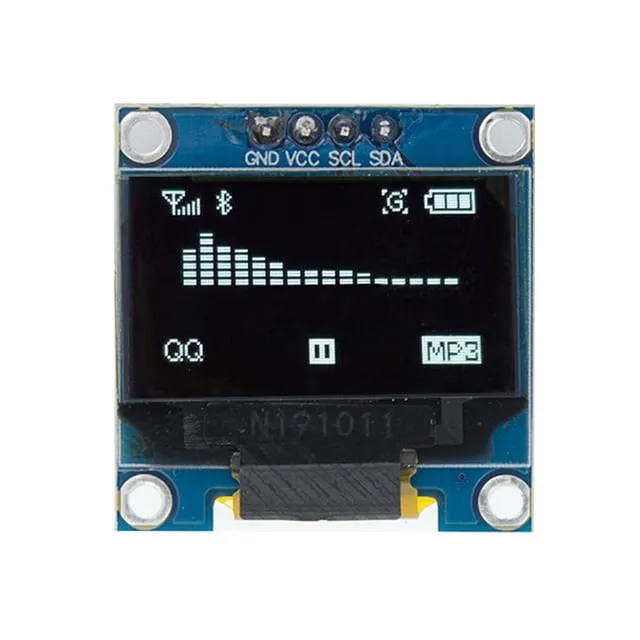
Mini display OLED branco 0.91 polegadas 128x32 I2C
€ 2,99
Ver esta alternativa
Como ligar o Mini display OLED amarelo/azul 0.96 inch 128x64 I2C a um Arduino UNO ou ESP32, com um sketch de exemplo que podes carregar já.
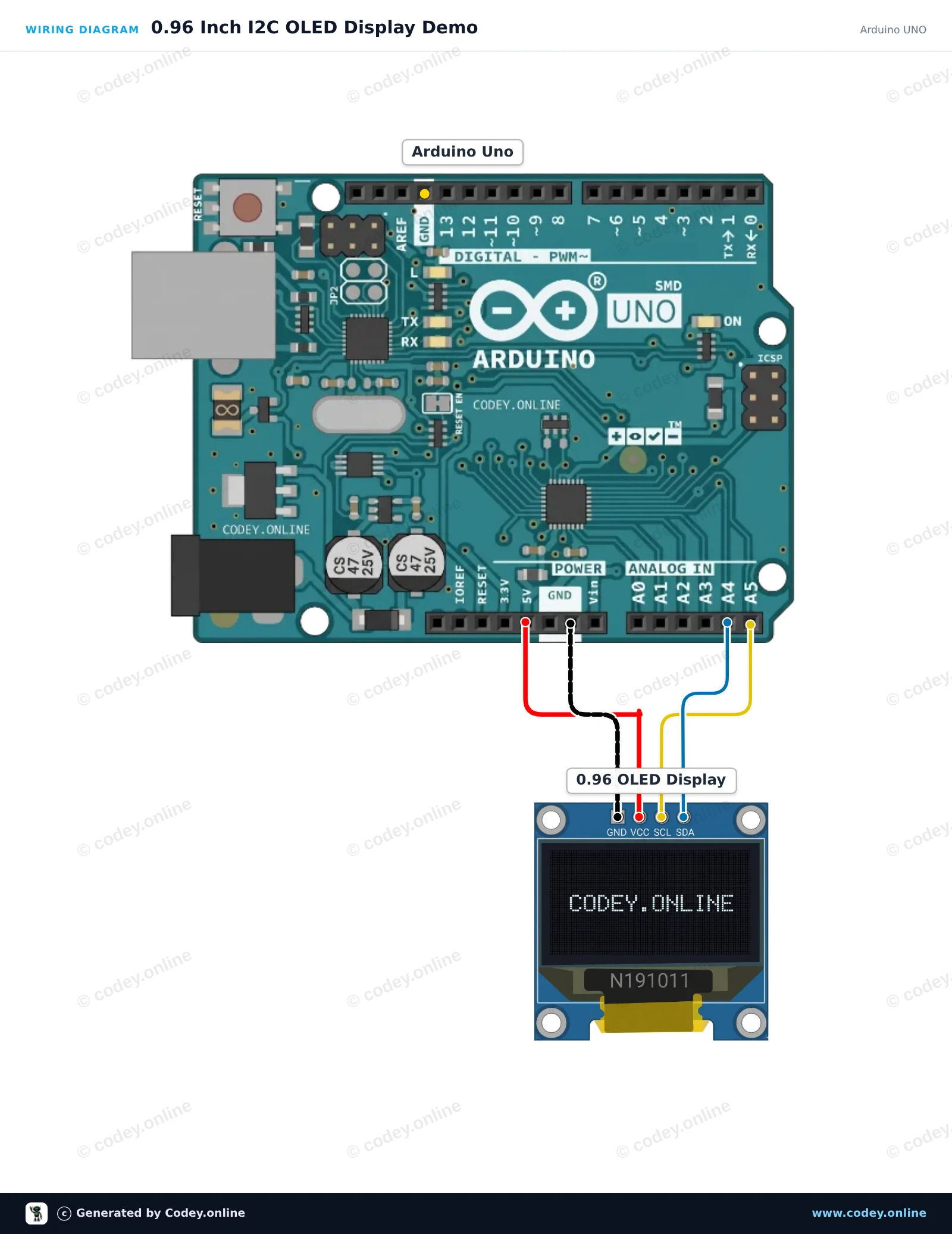
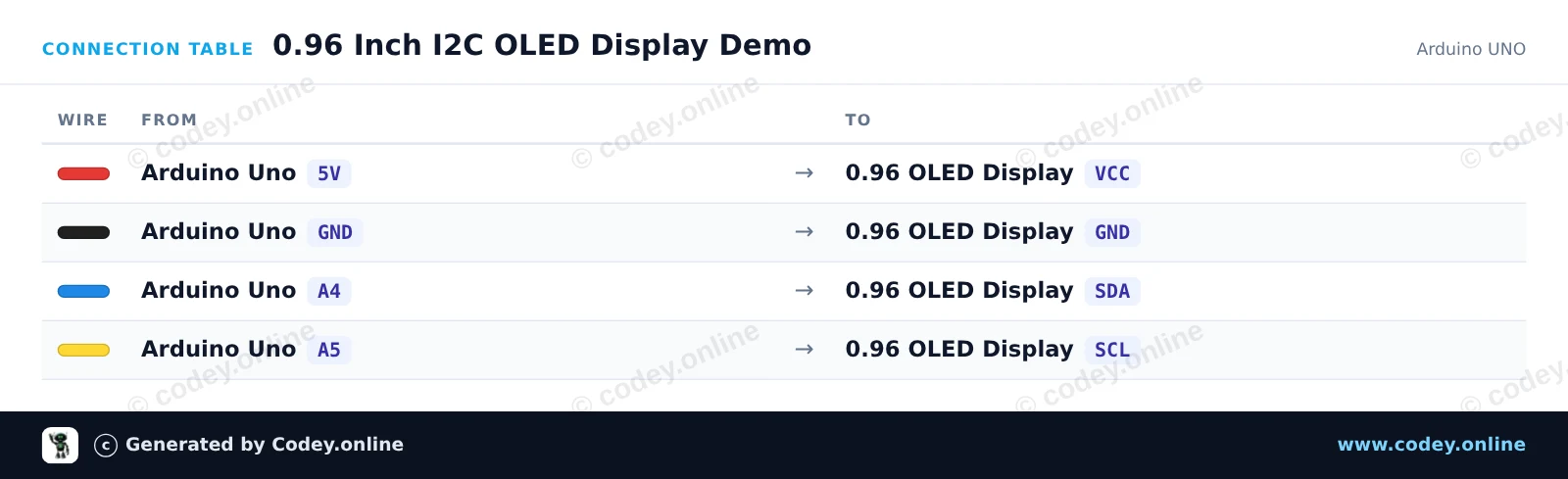
This project displays dynamic text, uptime, and an animated progress bar on a 0.96-inch SSD1306 OLED screen using the lightweight U8g2 library. Connect the display via I2C to analog pins A4 and A5 on the Arduino Uno and power it with 5V to see the counter and graphics update smoothly.
/*
* ==================================================================
* Generated by Codey.online — https://www.codey.online
* ==================================================================
* Project : 0.96 Inch I2C OLED Display Demo
* Board : Arduino UNO (arduino:avr:uno)
* Parts : OLED Display 0.96 inch
* Libraries : U8g2 2.36.19
*
* Codey Online is an AI-powered browser IDE for Arduino and ESP32.
* Describe your project and Codey writes the code, draws the wiring
* diagram and uploads it to your board, straight from the browser.
* This code is free to use, modify and share, without warranty.
* ==================================================================
*/
#include <Wire.h>
#include <U8g2lib.h>
// Initialize U8g2 in page-buffer mode for SSD1306 128x64 I2C display
U8G2_SSD1306_128X64_NONAME_1_HW_I2C u8g2(U8G2_R0, /* reset=*/ U8X8_PIN_NONE);
int counter = 0;
void setup() {
u8g2.begin();
}
void loop() {
u8g2.firstPage();
do {
// Title Header
u8g2.setFont(u8g2_font_ncenB08_tr);
u8g2.drawStr(0, 10, "0.96\" OLED Demo");
u8g2.drawHLine(0, 13, 128);
// Text info
u8g2.setFont(u8g2_font_6x10_tr);
u8g2.drawStr(0, 28, "Uptime:");
u8g2.setCursor(55, 28);
u8g2.print(millis() / 1000);
u8g2.print(" s");
u8g2.drawStr(0, 42, "Count:");
u8g2.setCursor(55, 42);
u8g2.print(counter);
// Animated progress bar
int barWidth = (counter % 124);
u8g2.drawFrame(0, 50, 128, 12);
u8g2.drawBox(2, 52, barWidth, 8);
} while (u8g2.nextPage());
counter++;
delay(100);
}
Bibliotecas necessárias: U8g2 2.36.19
Wiring diagram and example code generated by Codey.online — https://www.codey.online
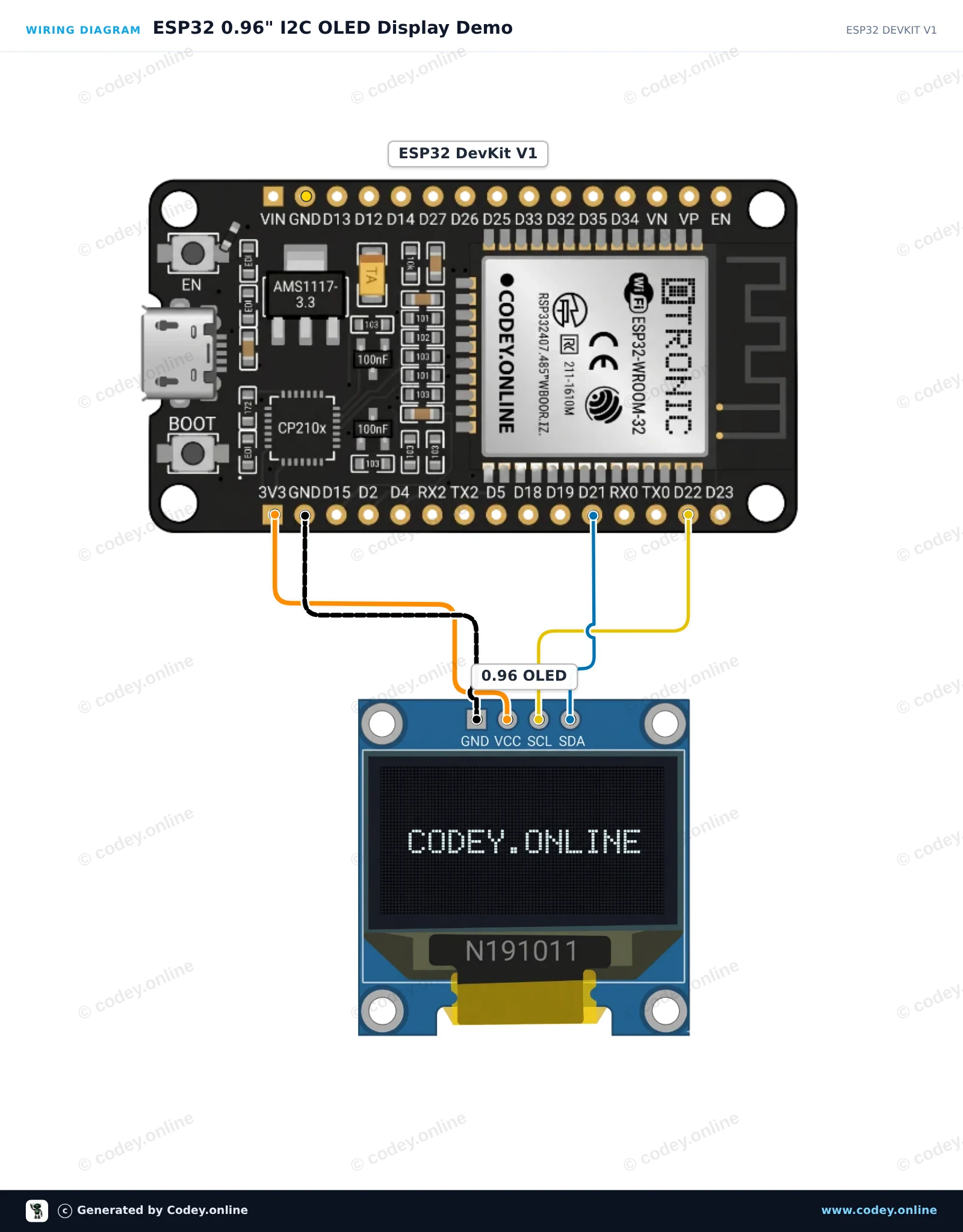
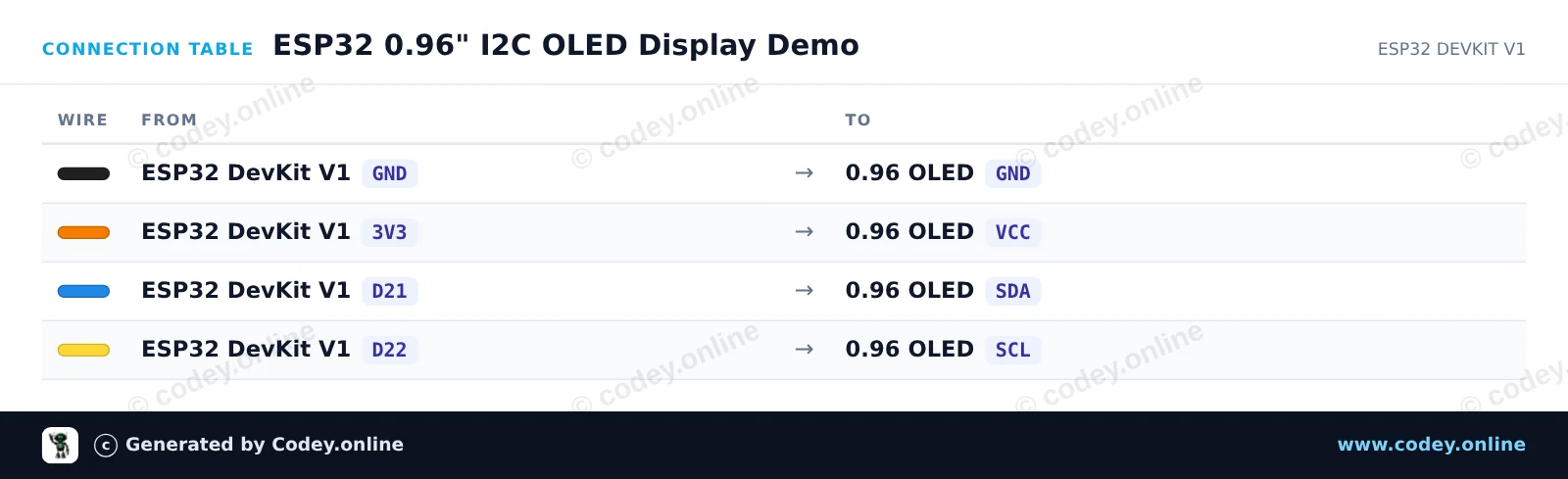
This project shows how to connect a 0.96-inch I2C OLED display (SSD1306) to an ESP32 board. The sketch initializes the display and presents a live updating counter along with sample text.
/*
* ==================================================================
* Generated by Codey.online — https://www.codey.online
* ==================================================================
* Project : ESP32 0.96" I2C OLED Display Demo
* Board : ESP32 DEVKIT V1 (esp32:esp32:esp32doit-devkit-v1)
* Parts : OLED Display 0.96 inch
* Libraries : Adafruit SSD1306 2.5.16, Adafruit GFX Library 1.12.6
*
* Codey Online is an AI-powered browser IDE for Arduino and ESP32.
* Describe your project and Codey writes the code, draws the wiring
* diagram and uploads it to your board, straight from the browser.
* This code is free to use, modify and share, without warranty.
* ==================================================================
*/
#include <Wire.h>
#include <Adafruit_GFX.h>
#include <Adafruit_SSD1306.h>
#define SCREEN_WIDTH 128
#define SCREEN_HEIGHT 64
#define OLED_RESET -1
#define SCREEN_ADDRESS 0x3C
Adafruit_SSD1306 display(SCREEN_WIDTH, SCREEN_HEIGHT, &Wire, OLED_RESET);
int counter = 0;
void setup() {
Serial.begin(115200);
// Initialize I2C and display
if (!display.begin(SSD1306_SWITCHCAPVCC, SCREEN_ADDRESS)) {
Serial.println("SSD1306 allocation failed");
for (;;); // Don't proceed, loop forever
}
display.clearDisplay();
display.setTextColor(SSD1306_WHITE);
display.setTextSize(1);
display.setCursor(0, 0);
display.println("ESP32 OLED Demo");
display.display();
delay(2000);
}
void loop() {
display.clearDisplay();
// Title
display.setTextSize(1);
display.setCursor(0, 0);
display.println("ESP32 + OLED 0.96\"");
display.drawLine(0, 12, 127, 12, SSD1306_WHITE);
// Counter display
display.setCursor(0, 20);
display.println("Uptime Seconds:");
display.setTextSize(2);
display.setCursor(0, 36);
display.print(counter);
display.display();
counter++;
delay(1000);
}
Bibliotecas necessárias: Adafruit SSD1306 2.5.16, Adafruit GFX Library 1.12.6
Wiring diagram and example code generated by Codey.online — https://www.codey.online
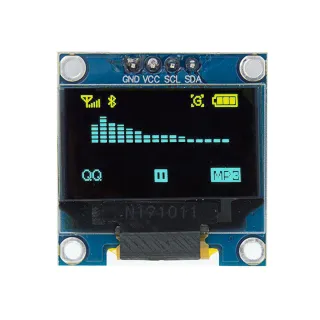
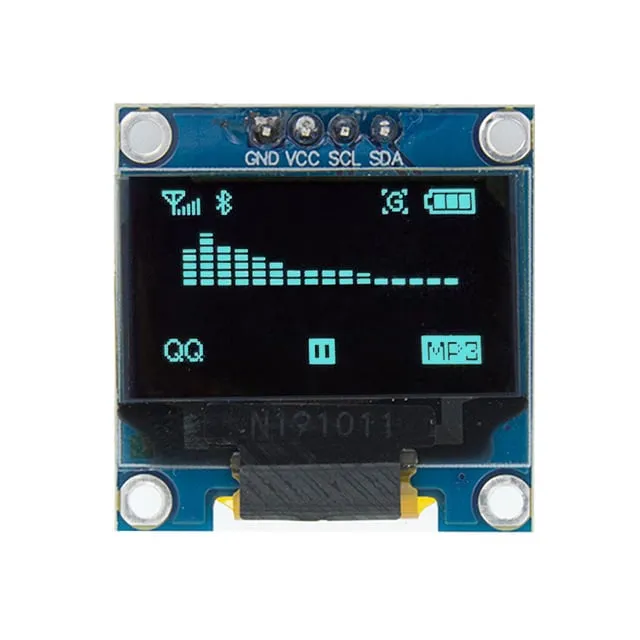
0,96 inch mini ecrã OLED de 2 cores (amarelo/azul). Imagem nítida com uma resolução de 128x64 pixels.
ATENÇÃO: Isto NÃO é um ecrã OLED full color. A faixa superior de pixels é amarela (16 pixels) e a parte inferior é azul (48 pixels).
Funciona com uma fonte de alimentação de 3v-5v. Ideal para projetos Arduino ou ESP32 / ESP8266.
As dimensões desta placa são apenas 26,1 x 26,1 x 3,2mm.
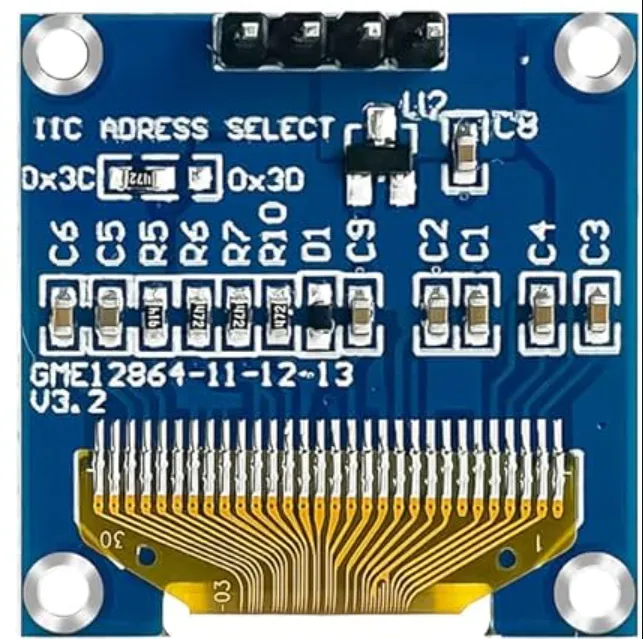
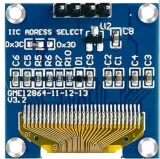
Há 2 endereços i2c que podem ser selecionados alterando a resistência na parte traseira.
Os endereços disponíveis são: 0x3C (default) e x3D
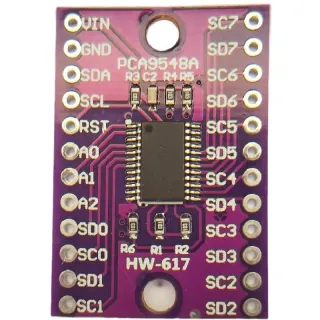
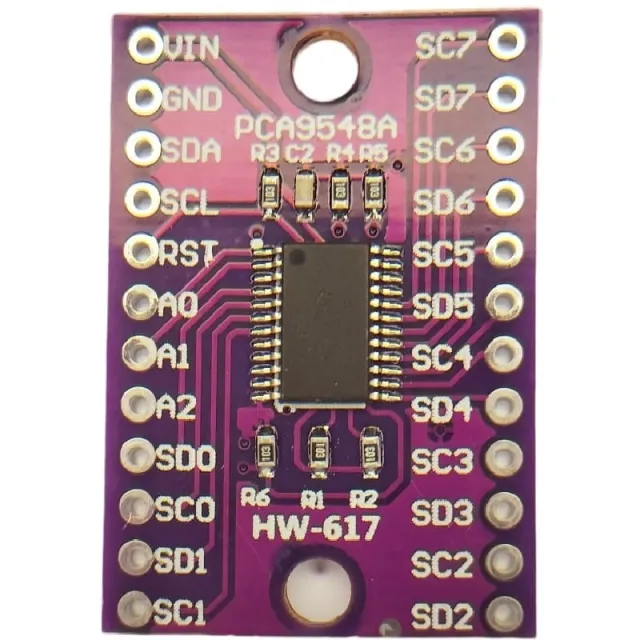
Se quiser controlar vários displays OLED ou se não quiser soldar o SMD, então pode, através de um multiplexador i2c, também controlar até 8x displays i2C com o mesmo endereço.
Dimensões
Comprimento: 2,61cm
Largura: 2,61cm
Altura: 0,32cm
| Alimentação | 3V-5V |
|---|---|
| Dimensões | 26,1 x 26,1 x 3,2 mm |
| Cor | amarelo/azul |
| Conexão | I2C |
| Resolução | 128 x 64 pixels |
| Adequado para | Arduino, ESP32, ESP8266 |
| Formato | 0,96 polegadas |
| Endereço I2C | 0x3C, 0x3D |
Fácil de programar e barato
Não ficas satisfeito? Tens 30 dias após a receção para devolver o produto.
Tudo sobre devoluções
Mini display OLED amarelo/azul 0.96 inch 128x64 I2C